

Manufacturing Solution
Laser Cutting Services
CNC fiber laser cutting for sheet, plate and structural tubing from 2D DXF or 3D CAD geometry. Cut quality, edge condition and the production route are confirmed against the part requirements.
- Process
- Fiber laser profile cutting for sheet, plate and tubular profiles
- Typical materials
- Carbon steel, 304/316 stainless steel, 5052/6061 aluminum, galvanized steel and brass
- Supported files
- DXF, DWG, STEP and PDF engineering drawings
- Order size
- Prototype quantities through recurring production, subject to project scope and capacity
- Delivery
- Freight coordination and packaging options defined in the project scope
Tool-Free CAD/CAM Sheet & Plate Profile Cutting
Fiber laser cutting directs a focused beam along CNC paths, with assist gas helping remove molten material. It can produce flat profiles without a dedicated die; edge condition depends on the material, thickness, geometry and cutting parameters.
A file review considers feature sizes, kerf allowance, assist gas, nesting and downstream requirements before the route is confirmed. Material grade, dimensions, tolerances, inspection and timing are agreed for each project.
- Flat blanks, brackets, gussets, flanges and panels
- Hole patterns, slots and tab-and-slot features in a cutting program
- Potential follow-on press brake bending, welding and surface coating, subject to scope
Cutting Capabilities & Process Management
Process options are reviewed against part geometry, material, finish requirements and the selected production route.
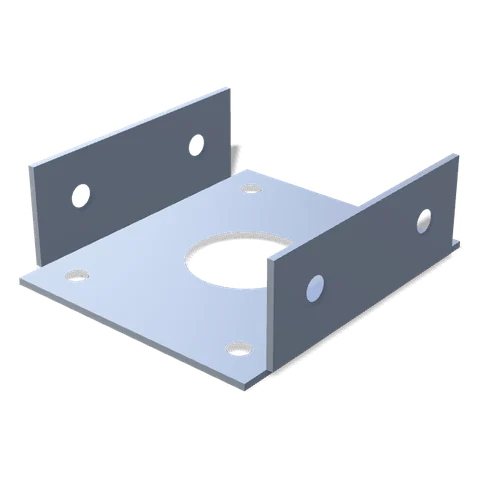
01 · Sheet and plate profiles
CNC profile cutting for sheet and plate. Feasible thickness, edge condition and heat effects depend on the material, geometry and available equipment.
-

02 · 3D tube laser cutting
Rotary cutting for round, square and rectangular tube may combine profile cuts, copes and holes in one setup when the equipment and geometry allow.
Learn more 
03 · Nesting and material use
CAD nesting arranges part profiles on sheet stock. Layout and expected yield are reviewed against part mix, grain direction and order quantity.
04 · Assist gas and edge condition
Gas selection depends on alloy, thickness and downstream needs. Nitrogen can help limit oxidation on stainless edges; oxygen may be used for some carbon steel cuts and can leave an oxide layer.
05 · Marking and etching
Part identification or reference marks may be included where the machine, material and drawing requirements support them.
06 · Edge finishing
Deburring, oxide removal or surface graining can be scoped where available and appropriate before downstream processing.
Illustrative Cutting Setups and Parts
Images illustrate common equipment and part forms; they do not represent a specific facility or confirmed project capability.
-

Sheet profile cuttingCutting head and sheet processing setup. -
Nested sheet cutoutsPart layout and remaining sheet skeleton. -

Clean, deburred blanksIllustrative flat blanks with finished edges, ready for downstream fabrication. -
3D tube laser setupRotary equipment for tubular profiles.
Scope and Specifications
The quotation confirms capability, inspection and delivery details for the selected material and production route.
- Core process
- CNC fiber laser profile cutting; process route confirmed per part
- Typical materials
- Mild/carbon steel, stainless steel, aluminum, galvanized sheet and brass; grade and condition subject to review
- Maximum thickness and sheet dimensions
- Evaluated against material grade and available machine bed and capacity
- Tolerances
- Cut profile tolerances confirmed after CAD and drawing review
- Documentation
- Material test reports (including EN 10204 3.1 where available), FAI and CoC may be scoped and agreed for the project
- Lead time
- Schedule established after file, material, quantity and process review
Design for Manufacturability (DFM) Guidelines
Use these as discussion points; final feature limits depend on material, thickness, geometry and the selected process.
01 · Provide clean 1:1 geometry
Export DXF or DWG profiles at full scale with closed contours. Remove duplicate lines and keep title blocks and dimensions in the PDF drawing.
02 · Review minimum feature sizes
As an initial rule of thumb, keep hole diameters and slot widths at or above material thickness. Confirm smaller features against the grade, thickness and drawing requirements.
03 · Plan for micro-joints and tabs
Small connecting tabs may help retain delicate parts in the sheet skeleton. Their use and any cleanup are agreed during file review.
04 · Account for kerf and assist gas
Include critical dimensions and edge requirements on the drawing. Kerf compensation and gas choice are set for the selected material and process; specify where oxide-sensitive edges matter.
05 · Consider standard stock gauges
Where the design allows, consider commercially available sheet and plate thicknesses. Material availability and any effect on function should be confirmed before release.
Laser Cutting Questions
What files should I send for a quote?
Send a DXF, DWG or STEP file with a PDF drawing that identifies material, thickness, quantity and critical dimensions. Include finish and inspection requirements if they apply.
Which materials can be reviewed?
Common requests include carbon steel, stainless steel, aluminum, galvanized sheet and brass. Feasibility depends on the exact grade, condition, thickness and available process.
What tolerances and thicknesses are available?
These are confirmed after reviewing the part geometry, material and selected machine. Mark critical features and dimensions on the drawing so they can be assessed.
Can inspection or material documents be provided?
Inspection reports, FAI, CoC and material test reports can be discussed during quotation. Availability and requirements must be agreed for the project.
Can cutting be combined with bending or finishing?
Related operations can be evaluated as part of the same project. The quotation defines the available process route, inspection scope, packaging and delivery terms.
Have a part to cut?
Share the CAD file, drawing, material and quantity. The project requirements can then be reviewed for scope, process, documentation and schedule.
Related pages

Sheet Metal Fabrication
Cut, formed, joined and finished sheet metal components and assemblies.
Learn more
Metal Stamping
Metal stamping and custom die tooling for repeat components and production programs.
Learn more
Pipe and Tube Processing
Cutting, bending, end forming and welding for tubular components and frames.
Learn moreSheet Metal Materials
Compare stainless, aluminum and carbon steel grades by typical properties.
Learn more