
Manufacturing Solution
Metal Stamping
Precision stamping for steel, stainless steel, aluminum and brass components. Die design, strip layout, sample validation and production scope are reviewed for each project.
- Processes
- Blanking, piercing, forming, deep drawing, coining, embossing
- Die types
- Progressive, transfer, compound and single-stage forming dies
- Typical materials
- Low carbon and galvanized steel, 304/316 stainless steel, 5052 aluminum, brass
- Documentation
- Tooling layout review, FAI and PPAP Levels 1-3 by project agreement
- Delivery
- Packaging and freight terms defined in the project quotation
High-Volume Precision Component Manufacturing
Metal stamping converts coil or sheet stock into components using custom die tooling. It can support repeatable production and unit cost efficiency for medium-to-high volume runs when the design and process are suited to stamping.
A Design for Manufacturability (DFM) review can assess strip layout, material use, die maintenance and secondary operations before tooling is fabricated. Tooling ownership and maintenance responsibilities are defined with the project scope.
- Review strip layout and die concept before tool fabrication
- Agree tooling ownership and maintenance responsibilities up front
- Consider tapping, hardware insertion, deburring and finishing as secondary operations
Stamping Process Capabilities
Tooling methods are selected against part geometry, complexity, material and planned volume.
- 01
Progressive Die Stamping
Coil-fed strip advances through successive stations for piercing and forming. It may suit repeat components such as brackets, clips, hinge leaves and electrical terminals.
- 02
Transfer Die Stamping
Individual blanks move between die stations. This method can suit larger components and deeper forms that need separate station handling.
- 03
Compound Die Stamping
Blanking and piercing are combined in one press stroke. It may suit flat profiles such as washers, plates and shims.
- 04
Deep Drawing
A sheet blank is formed into cups, enclosures or shells through one or more draw stages. Material flow and part geometry are assessed during tooling review.
- 05
Secondary Operations and Assembly
Tapping, hardware insertion, deburring, finishing and other follow-on work can be reviewed as part of the proposed manufacturing route. Availability and scope are confirmed for each project.
Illustrative Stamping Equipment and Details
Illustrative images show common equipment, part forms and inspection details; they do not document Prime Craft Metal facilities or client work.
-
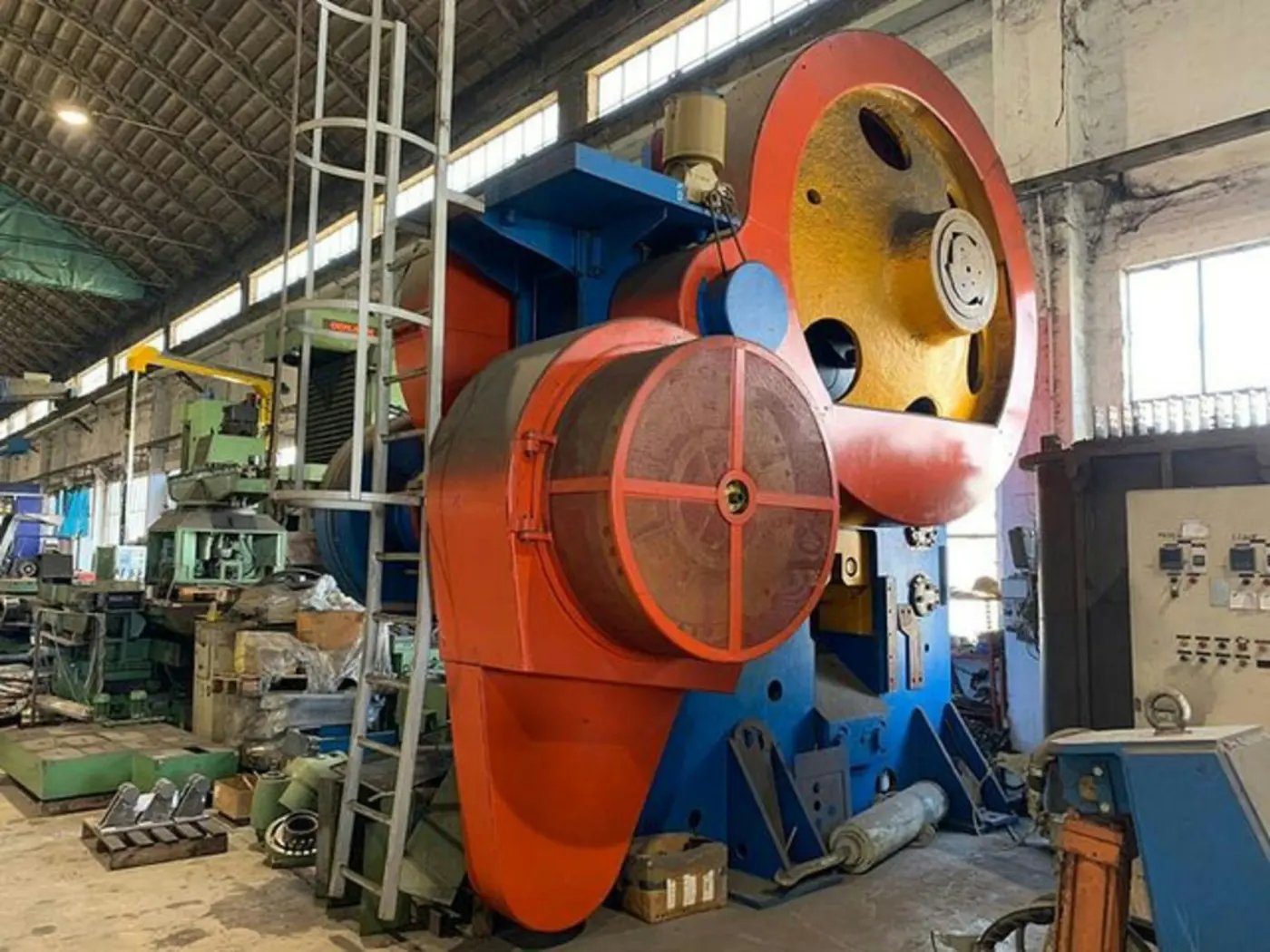
Mechanical pressA press used for sheet metal forming operations. -
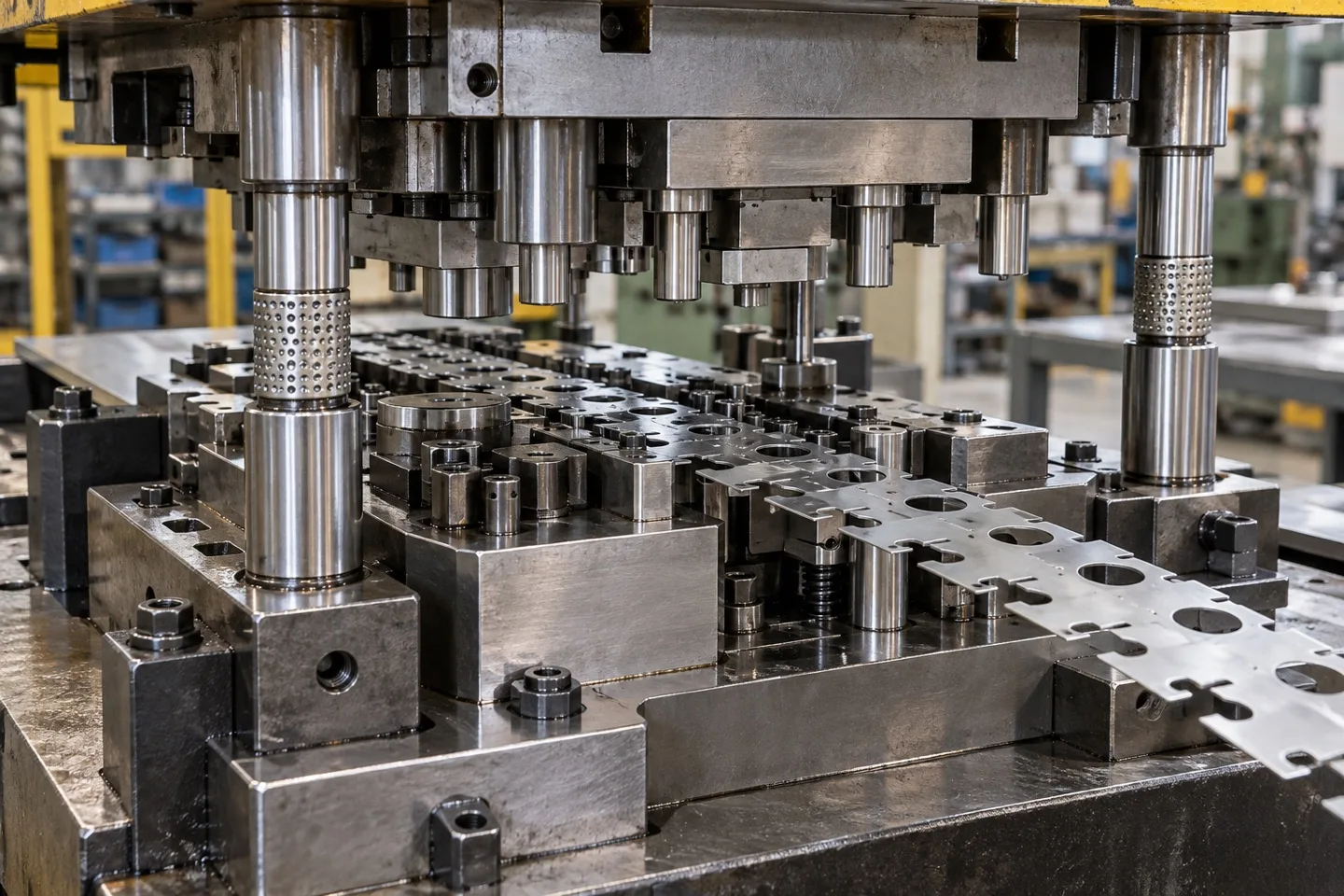
Progressive die toolingIllustrative tooling layout with a formed strip. -

Coil feed lineIllustrative coil handling and strip feed arrangement. -

Deep-drawn cupsCup forms made through drawing operations. -
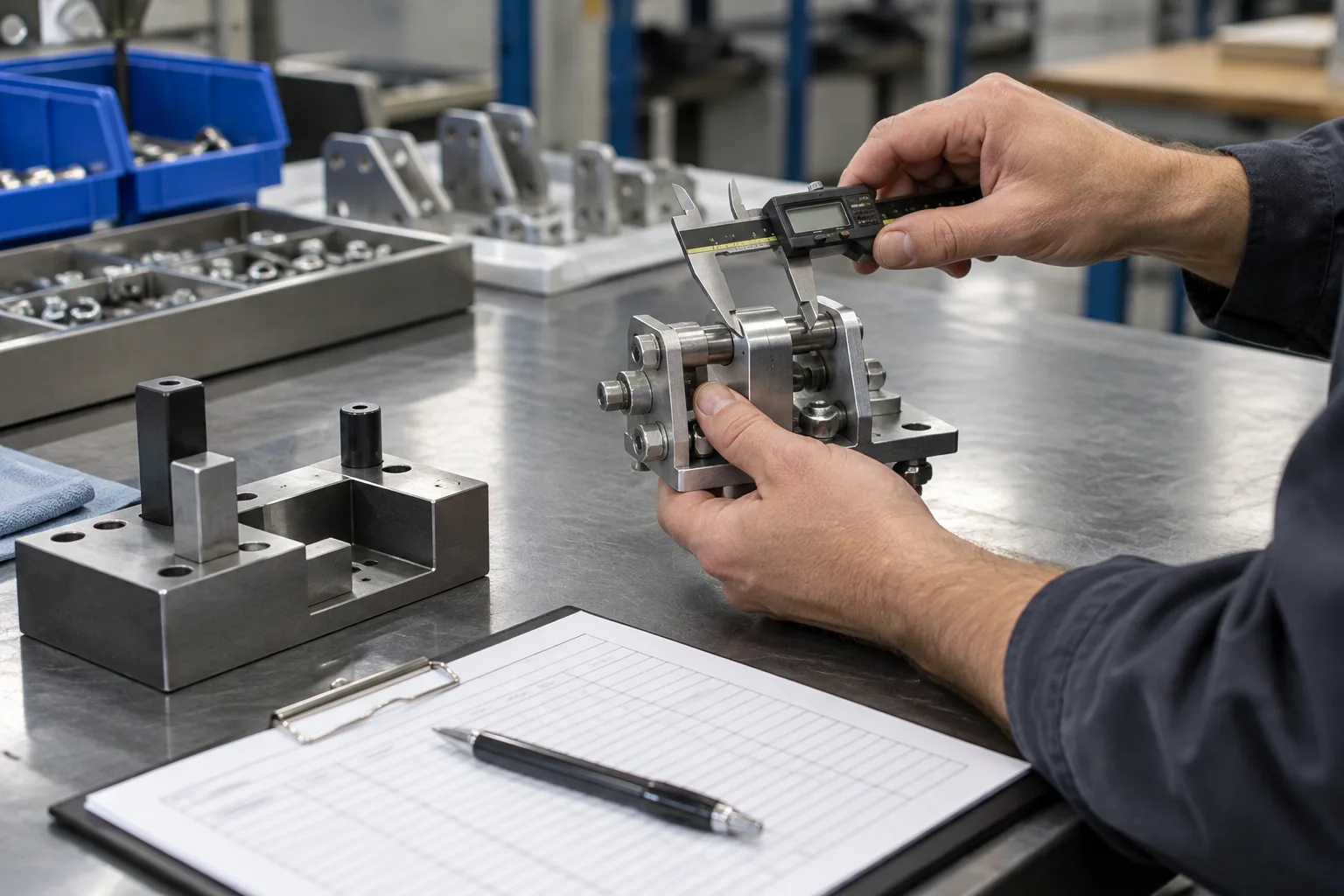
Dimensional inspectionIllustrative bench inspection with a digital caliper.
Scope and Specifications
The drawing review and project quotation define the applicable process, inspection and schedule.
- Forming processes
- Blanking, piercing, bending, drawing, coining and embossing
- Tooling options
- Progressive, transfer, compound and stage tooling, subject to design review
- Material thickness and press capacity
- Evaluated against component geometry, material grade and selected facility
- Tolerances
- Die-controlled tolerances reviewed and agreed during drawing evaluation
- Sample stage
- First article samples and inspection records scoped before production release
- Documentation
- FAI and PPAP Levels 1-3 can be requested for scope confirmation
- Lead times and delivery
- Tooling, production, packaging and freight terms set out in the quotation
Design for Manufacturability (DFM) Guidelines
These are starting points for review. Material, geometry, tooling and functional requirements can change the recommendation.
Hole proximity to edges
A hole-to-edge distance around twice the material thickness is a common starting point. Confirm the minimum against material, hole size and edge condition during die review.
Recommended bend radii
An inside bend radius at or above material thickness is a useful initial guideline. Review tighter radii against grade, temper, grain direction and forming method.
Manage material springback
Review springback for the selected grade and geometry. Ribs or coined bend lines may be considered where they suit the part and function.
Minimize narrow features
Review narrow webs and punches with the tooling designer, since feature width, material and clearance affect tool strength and maintenance.
Standardize material gauges
Consider standard commercial sheet and coil gauges where they meet design requirements and are available for the project.
From Drawing to Stamped Parts
Review points and deliverables are agreed for the project before each stage proceeds.
- 01
Quote and DFM review
Review the drawing, material, quantities and intended use to define the initial process and quotation scope.
- 02
Tooling concept
Review strip layout and die concept, including ownership and maintenance terms, before tool fabrication.
- 03
Tooling build and samples
Plan tryout and sample review around the approved design and agreed inspection requirements.
- 04
Production release
Review first article results and any requested PPAP documents before production release, as defined in the project scope.
Stamping Questions
Which stamping method is right for my part?
The choice depends on part geometry, material, volume and production requirements. A drawing and quantity review helps identify suitable options for quotation.
Can you provide FAI or PPAP documents?
FAI and PPAP documentation can be requested for review. The applicable level, records and timing are confirmed in the project scope.
How are tolerances and material thickness determined?
They are reviewed against the drawing, material grade, tooling approach and available press capacity. Requirements are agreed before the project proceeds.
How are tooling and production lead times set?
The quotation defines the proposed schedule after drawing, tooling, quantity and inspection requirements have been reviewed.
Have a stamped part to source?
Share your drawing, material and expected volume for a review of the project requirements and quotation scope.
Related pages

Sheet Metal Fabrication
Cut, formed, joined and finished sheet metal components and assemblies.
Learn more
Laser Cutting
Fiber laser profile cutting for sheet, plate and tubular parts, with scope reviewed per project.
Learn more
Design for Manufacturability
A scoped engineering review of design and process considerations.
Learn more